
Wimbledon's Trusted Roofing Specialists · Serving a 5-Mile Radius
📞 07563 865709 ⏰ 24/7 Emergency Response
Roofing Service

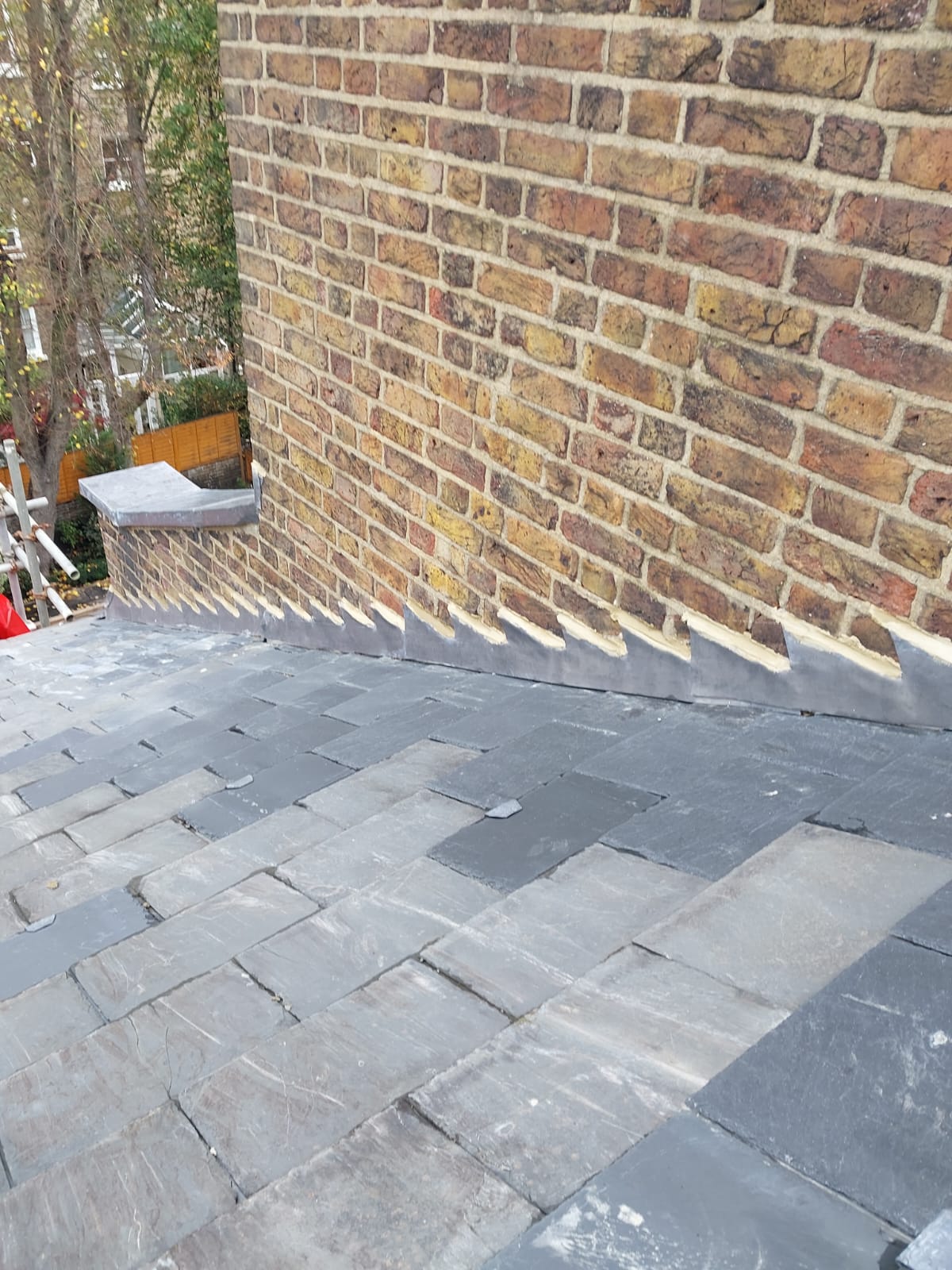
Leadwork & Flashing

Specialist leadwork to BS standards. Heritage chimneys, valleys and flashings across South London.

Lead is the traditional material for roof flashings, valleys, chimney backs and parapet capping — and for good reason. Properly installed lead lasts 100+ years and remains the gold standard for period properties.

What is leadwork?

Rolled sheet lead (milled lead) used to weatherproof junctions and transitions on a roof:

  • Flashing — joins between roof and wall/chimney/abatment
  • Valley gutter — internal angle between two roof slopes
  • Chimney back gutter — where chimney meets rear roof slope
  • Apron flashing — joins roof to vertical wall
  • Parapet capping — covers top of parapet walls
  • Bay window roof — covers flat or pitched bays

Why lead?

  • 100+ year lifespan — outlasts most other roofing materials
  • Fully recyclable — sustainable choice
  • Malleable — can be bossed (shaped) to fit any detail
  • Self-healing — small scratches form protective patina
  • Heritage-correct — the original material on Victorian/Edwardian properties

Lead codes (thickness)

Different applications require different lead thicknesses:

  • Code 3 (1.32mm) — soakers under tiles/slates
  • Code 4 (1.80mm) — flashings, apron pieces
  • Code 5 (2.24mm) — horizontal flashings, chimney backs
  • Code 6 (2.65mm) — valley gutters
  • Code 7 (3.15mm) — flat roof bays, parapet cappings

We always specify the correct code for each application. Using thinner lead to save money is the most common cause of premature failure.

How we install leadwork (to BS 6915)

  1. Measure and cut lead to correct dimensions (with 150mm minimum laps)
  2. Form upstands, steps and welted edges as required
  3. Fix with copper or stainless steel clips (NOT galvanised — they corrode)
  4. Weld joins using traditional lead burning techniques
  5. Patination oil treatment to prevent white staining on adjacent materials
  6. Integrate properly with surrounding tiles or slates

Common leadwork problems

  • Splitting at joints — usually thermal movement without proper expansion allowance
  • Slipping — clips failed or absent
  • Staining — lead run-off staining brickwork or render (mitigated with patination oil)
  • Pinhole leaks — corrosion from acidic mortar contact
  • Storm damage — high winds tearing flashing from chimney

Conservation area work

Most conservation areas (Wimbledon Village, parts of Putney, Carshalton Ponds) require leadwork on period properties — both for visual heritage and for longevity. We're experienced with Merton, Wandsworth and Sutton conservation requirements.

Cost guide

  • Chimney flashing renewal (per chimney): £400-£800
  • Valley gutter replacement: £80-£150 per linear metre
  • Bay window roof: £600-£1,200
  • Parapet capping: £100-£180 per linear metre
Benefits

Why choose this service

  • 100+ year lifespan — outlasts most other roofing

  • Heritage-correct for period properties

  • Fully welded and bossed — no sealants that fail

  • Compatible with slate, tile and lead roofs

  • Conservation-area compliant

Our Process

How we work

Inspect

Assess lead condition, surrounding tiles.

Cut & weld

Form new lead to BS code requirements.

Install

Step, clip, welt as appropriate.

Re-bed & point

Restore adjacent masonry/tiles.

Warning Signs

When to call us

  • ⚠ Failed flashing at chimney

  • ⚠ Valley splitting or splitting at joints

  • ⚠ Damp appearing at chimney breast

  • ⚠ Storm damage to lead valleys

FAQs

Common questions

How quickly can you attend an emergency?

For storm damage and active leaks we aim to be on site within 2 hours of your call, 24/7 across Wimbledon and South London.

Do you provide written quotes?

Yes — every job receives a detailed, fixed-price written quote. No verbal estimates, no surprise extras. Quotes are valid for 30 days.

Are you insured?

Yes — we hold £2 million public liability insurance. Documentation is available on request before any work begins.

Do you handle insurance claims?

Yes — for storm damage and similar insurance work we handle the entire claims process including documentation, loss adjuster liaison and direct insurer billing where applicable.

What's the difference between code 4, 5, 6 and 7 lead?

Higher codes mean thicker lead. Code 4 for soakers, code 5 for flashings, code 6 for valley gutters, code 7 for flat roof bays. We always use the correct code for the application.

How long does lead flashing last?

Properly installed lead flashing to BS standards lasts 100+ years. Common failures are due to incorrect installation — wrong code, wrong clips, or no expansion allowance.

Can leadwork be repaired or does it need replacing?

Small splits and pinholes can be patch-welded. Larger damage usually requires full replacement of the affected section.

Do you use sealant with lead?

No — properly installed leadwork doesn't need sealant. Sealant fails; lead lasts.

Related

Other services you may need

New Roof Installation

Complete re-roofs and new build roofing for Wimbledon homes and businesses. Slate, tile and modern systems with full warranties.

Learn more →

Roof Repairs

Leaks, slipped tiles, damaged flashing, chimney issues. Diagnosed and fixed properly the first time.

Learn more →

Emergency Roof Repairs

Storm damage, active leaks, fallen trees. We respond within 2 hours, 24/7.

Learn more →

Flat Roofing

EPDM, GRP and felt flat roof systems. 20+ year manufacturer warranties.

Learn more →
Local & Trusted

Leadwork & Flashing Across Wimbledon & South London

Fast response within our full 5-mile coverage area.

View all 52 areas →

Ready to book leadwork & flashing?

Free, no-obligation written quote within 48 hours.

Get Your Quote →
Chat on WhatsApp